
Hearing that a tooth is infected or badly damaged often leads to one big question. Should you try to save it with a root canal, or remove it and move on? Both are common treatments, and both can relieve pain, but they lead to very different paths afterward.
The right answer depends on how much healthy tooth remains, the condition of the surrounding bone and gums, and your long-term goals. This guide explains how dentists compare the two options so you can have a more informed conversation at your visit.
At Empower Dental Group, Burbank – Coastland Dental, our restorative dentistry team evaluates whether a tooth can be saved before recommending removal.
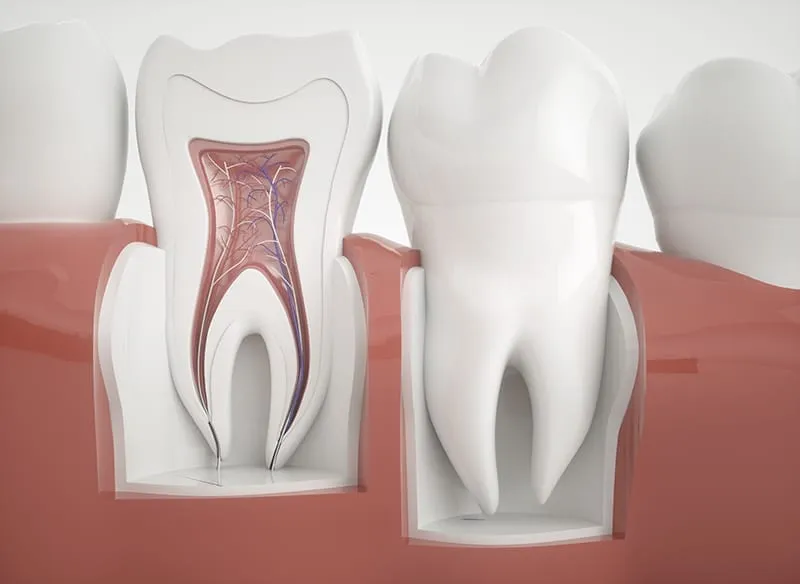
What Each Treatment Involves
A root canal removes infected or inflamed pulp from inside the tooth, cleans and shapes the canals, and seals them. The outer tooth stays in place. Because the tooth often becomes more brittle afterward, back teeth usually need a crown to protect them from cracking.
An extraction removes the entire tooth, including its roots. It ends the infection at that site, but it leaves a gap that will affect your bite, your appearance, and possibly the bone underneath. The ADA’s page on root canals offers a helpful patient-friendly overview.
When Saving the Tooth Usually Makes Sense
Many dentists lean toward saving a natural tooth when it is reasonably possible. Your natural root keeps stimulating the jawbone, holds neighboring teeth in place, and preserves your natural bite feel.
A root canal is often a good option when the tooth has enough sound structure to support a crown, the roots are not cracked, and the gums and bone around it are healthy. Once restored with a dental crown, a treated tooth may function well for many years with good care.
When Extraction May Be the Better Choice
Sometimes a tooth cannot be predictably saved. In those cases, extraction may be the more practical and comfortable path.
- A vertical crack or fracture that runs down into the root
- Decay that has destroyed too much of the tooth to support a crown
- Advanced gum disease with significant bone loss around the tooth
- A previous root canal that has failed and cannot be reasonably retreated
- A tooth with little function, such as some wisdom teeth
Our oral surgery services cover simple and surgical extractions, with sedation options available for patients who feel anxious.
Comparing Comfort and Recovery
Modern root canals are performed with local anesthetic and often feel similar to getting a larger filling. Some tenderness for a few days is common. Extraction recovery usually involves a healing socket, soft foods, and care to protect the blood clot during the first several days.
The bigger difference shows up over the longer term. A root canal typically requires a crown appointment afterward. An extraction usually leads to a decision about replacing the missing tooth.
What Happens After an Extraction
Leaving a gap is an option, but it has consequences. Neighboring teeth may drift into the space, the opposing tooth may over-erupt, and the jawbone at the site can shrink over time. These changes can affect chewing and make future replacement more involved.
Common replacement options include a single tooth implant, a bridge, or a removable partial denture. If an implant is planned, your dentist may recommend bone grafting at the time of extraction to help preserve the site.
How Cost Fits Into the Decision
It is natural to compare the price of each option. Looking only at the first visit can be misleading, though. A root canal usually adds a crown, while an extraction often leads to an implant, bridge, or denture later on.
We accept all PPO plans in network, along with HSA and FSA. Financing through CareCredit, Affirm, HFD, Alphaeon, and Happen Bank may help you choose based on what is best for your health rather than on timing alone.
Questions to Ask Your Dentist
A good decision comes from clear information. Ask how confident your dentist is that the tooth can be saved, whether there are any cracks on imaging, and what the plan would be if the root canal does not succeed. If extraction is recommended, ask which replacement options fit your bone and bite. Our doctors practice as multi-skilled general dentists, so the same team can often guide you from diagnosis through the final restoration.
FAQs
Is a Root Canal Better Than Pulling the Tooth?
When a tooth can be predictably restored, saving it is often preferred. If the tooth is cracked through the root or too damaged, extraction may be the better option.
Does a Root Canal Hurt More Than an Extraction?
Both are done with numbing, and many patients find either one manageable. Recovery after an extraction may involve more swelling in the first few days.
Do I Have to Replace a Tooth After Extraction?
It is not required, but replacing it helps prevent shifting teeth and bone loss. Your dentist can explain which option suits you.
What if I Have a Dental Emergency With Severe Pain?
Our emergency dental care team offers same-day visits to relieve pain and discuss the next step.
Make the Choice With Confidence
Choosing between a root canal and an extraction is easier when you understand the condition of the tooth and what each path means for the future. A careful exam with imaging gives you the facts you need. To talk through your options, contact Empower Dental Group, Burbank – Coastland Dental and schedule an evaluation.