
A dental abscess is a pocket of pus caused by a bacterial infection in or around a tooth. It does not always look dramatic, and in some cases you may notice a strange bump or a change in color long before you feel serious pain.
Knowing what an abscess can look like helps you act quickly. Because the infection does not go away on its own, recognizing the signs early can make treatment simpler and help protect the tooth.
At Empower Dental Group, Burbank – Coastland Dental, our emergency dental care team offers same-day visits for suspected infections.
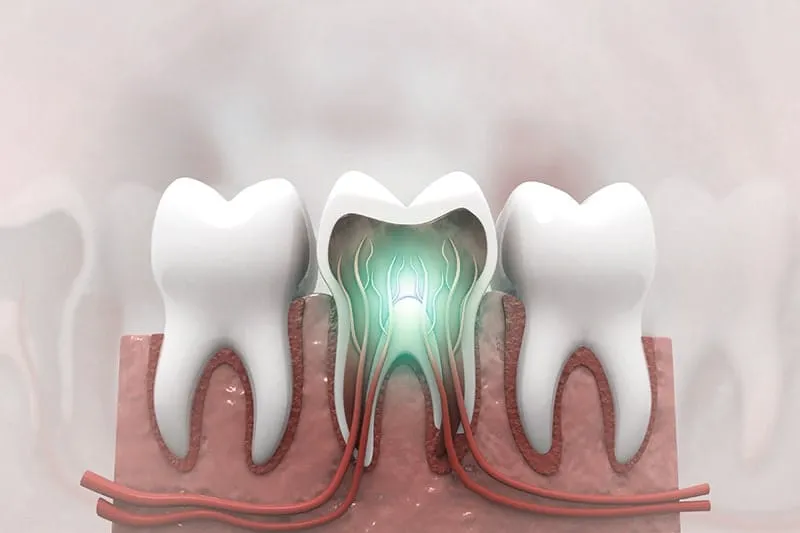
The Three Main Types and How They Appear
Where an abscess forms affects how it looks. Dentists usually group them into three types, and each one tends to show up a little differently.
Periapical Abscess
This type starts inside the tooth when decay, a crack, or past trauma lets bacteria reach the pulp. The infection collects at the tip of the root. On the outside, you may see a small raised bump on the gum near the root, often a bit above or below the tooth itself. The tooth may look darker than its neighbors.
Periodontal Abscess
A periodontal abscess forms in the gum pocket beside a tooth, often in people with gum disease. It usually appears as a red, shiny, swollen area along the side of the tooth. Pressing near the gumline may release pus, and the tooth may feel slightly loose.
Gingival Abscess
This type stays in the gum tissue and does not involve the tooth or deeper pocket. It often looks like a small, tender, red or whitish bump at the gum’s edge, sometimes triggered by something lodged in the gums, such as a popcorn hull or toothbrush bristle.
The Pimple on the Gum
One of the most recognizable signs is a small bump that looks like a pimple or blister on the gum. Dentists call this a fistula or sinus tract. It is a drainage channel the body creates to let pus escape.
The bump may come and go, and it may release a salty or bad-tasting fluid when pressed. Because the drainage relieves pressure, the area may not hurt much. That can be misleading, since the infection underneath is still active and still needs treatment.
Other Visual Clues to Watch For
Beyond the gum bump, an abscess can produce changes you can see in the mirror or feel with your tongue. Look for redness or swelling around one tooth, a tooth that has turned gray or darker, gums that look puffy and pull away from the tooth, or swelling in the cheek, jaw, or under the chin.
Some people also notice bad breath that does not improve with brushing, a bitter taste, or swollen lymph nodes in the neck. These signs may appear with or without a throbbing toothache.
What an Abscess Is Often Confused With
Several common mouth sores can look similar, which is why a professional exam is important. A canker sore is usually a shallow, round ulcer with a white or yellow center and a red border, often on the inside of the lip or cheek rather than over a tooth root. A cold sore typically forms on the outside of the lip.
Irritation from a sharp tooth edge, a burn from hot food, or a blocked salivary gland may also create bumps. An abscess is more likely when the bump sits near a specific tooth, keeps returning in the same spot, or drains fluid. X-rays help confirm the diagnosis, since an infection at the root tip may show up as a dark area around the root. MedlinePlus has a clear summary of tooth abscess symptoms and causes.
When Swelling Means You Need Care Right Away
Most abscesses should be seen by a dentist within a day or two. Some signs suggest the infection may be spreading and need immediate attention.
- Swelling that spreads toward the eye, down the neck, or under the tongue
- Difficulty swallowing, breathing, or fully opening your mouth
- Fever, chills, or feeling generally unwell
- A rapid heartbeat or confusion
If you have trouble breathing or swallowing, go to the nearest emergency room or call 911.
How a Dental Abscess Is Treated
Treatment focuses on draining the infection and removing its source. Depending on the type, that may involve draining the abscess, deep cleaning under the gums, root canal treatment to save the tooth, or removing a tooth that cannot be restored. Your dentist may also prescribe antibiotics in some situations, but antibiotics alone do not fix the source of the infection.
Gum-related abscesses often need follow-up care through our periodontics services. If extraction is the best option, our oral surgery team can help, with sedation options available for comfort.
FAQs
Can a Dental Abscess Go Away on Its Own?
The swelling may go down if the abscess drains, but the infection usually remains. Professional treatment is needed to clear the source.
Does a Dental Abscess Always Hurt?
No. Some abscesses cause little pain, especially if they are draining through a gum bump. That is why visual signs are worth paying attention to.
Is a Pimple on My Gum Always an Abscess?
Not always, but a recurring bump near a tooth is a common sign of infection and should be checked by a dentist.
What Should I Avoid Doing at Home?
Avoid popping or squeezing the bump and avoid placing aspirin directly on the gums. Rinsing gently with warm salt water may ease discomfort until your visit.
Do Not Wait on a Suspected Abscess
If you see a bump, swelling, or color change around a tooth, it is worth getting checked even if the pain is mild. We accept all PPO plans in network, along with HSA and FSA. Our team speaks English, Spanish, Russian, Arabic, and Armenian. To arrange a prompt exam, contact Empower Dental Group, Burbank – Coastland Dental.