
Wisdom teeth have a reputation for causing trouble, but that does not mean every one needs to be removed. Some grow in straight, function well, and can be kept clean for years. Others sit at an angle, stay trapped under the gums, or create problems that are easy to miss without an X-ray.
The decision to remove a wisdom tooth is usually based on what the tooth is doing now and what it is likely to do later. This guide walks through the most common reasons for extraction, the situations where monitoring may be reasonable, and how timing can affect recovery.
At Empower Dental Group, Burbank – Coastland Dental, our wisdom tooth extraction team can review your digital imaging with you before recommending treatment.
How Dentists Decide Whether a Wisdom Tooth Should Stay
The first question is whether the tooth has enough room to come in fully and sit in a healthy position. A dental exam and imaging show the angle of the tooth, how far it has erupted, how close the roots are to nerves or the sinus, and the condition of the bone around it.
A wisdom tooth that is fully erupted, aligned with your bite, surrounded by healthy gums, and easy to brush and floss may be a candidate for keeping. If any of those pieces is missing, your dentist will weigh the risks of leaving it against the benefits of removing it.
Clinical Reasons a Wisdom Tooth Extraction May Be Recommended
Certain findings tend to point toward removal. Many of them can develop quietly, which is why routine X-rays matter even when nothing hurts.
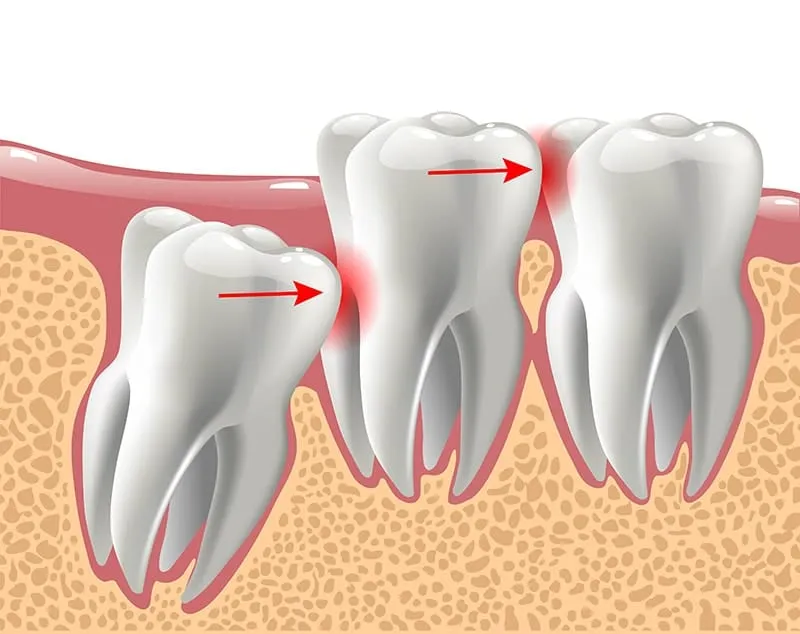
- Impaction, where the tooth is blocked by bone, gum tissue, or the neighboring molar
- Repeated gum infections around a partly erupted tooth
- Decay in the wisdom tooth that would be hard to restore
- Damage or decay on the back of the second molar caused by the wisdom tooth pressing against it
- Cysts or other changes in the bone around the tooth
- Ongoing pain, swelling, or difficulty opening the mouth
Understanding Impaction Types
Impacted teeth are often described by their angle. A mesial impaction tilts toward the front of the mouth and is one of the most common patterns. A horizontal impaction lies on its side, a vertical impaction is upright but stuck below the gumline, and a distal impaction tilts toward the back. The angle helps your dentist estimate how complex the extraction may be.
When Monitoring May Be Enough
Some wisdom teeth never cause problems. If a tooth is fully covered by bone, shows no signs of disease, and is not affecting nearby teeth, your dentist may suggest watching it with periodic imaging rather than removing it right away.
Monitoring is not the same as ignoring. It means checking the area at regular exams and cleanings so any change can be caught early. If the tooth starts to shift, decay, or irritate the gums, the plan can change.
Why Age and Timing Matter
Many dentists prefer to evaluate wisdom teeth in the late teens or early twenties. At that stage the roots are often not fully formed, and the surrounding bone tends to be more flexible, which may make removal more straightforward.
Extraction is still possible later in life, but healing can take longer and roots may sit closer to nerves. That does not mean older adults should rush into surgery. It simply means that if a tooth is likely to cause trouble, addressing it sooner may lead to an easier recovery. The American Dental Association offers a helpful overview of wisdom teeth and why they are evaluated.
Wisdom Teeth and Orthodontic Plans
Patients who have had braces or clear aligners often ask whether wisdom teeth will undo their results. The relationship is still debated, and crowding can happen for many reasons. Even so, your dentist may consider wisdom teeth as part of an orthodontic plan, especially if space at the back of the mouth is very limited. If you are planning orthodontic treatment, it is a good idea to discuss your wisdom teeth during that evaluation.
What to Expect if You Need an Extraction
Simple extractions of erupted teeth can be quick. Impacted teeth usually require a small incision and sometimes sectioning the tooth into pieces so it can be removed with less pressure on the bone. Our doctors practice as multi-skilled general dentists, and complex cases can be handled through our oral surgery services.
Comfort is a major concern for most patients. Local anesthetic numbs the area, and sedation dentistry options include nitrous oxide, oral sedation, IV sedation, and general anesthesia. Recovery often involves a few days of swelling and soft foods, along with careful home care to protect the healing site.
Paying for Wisdom Tooth Removal
We accept all PPO plans in network, along with HSA and FSA. Dental plans often include some benefit for extractions, and our team can review your coverage before treatment. Financing through CareCredit, Affirm, HFD, Alphaeon, and Happen Bank may also help.
FAQs
Do All Wisdom Teeth Need to Be Removed?
No. Healthy wisdom teeth that are fully erupted, well positioned, and easy to clean can sometimes stay with regular monitoring.
Can an Impacted Wisdom Tooth Cause Problems Without Pain?
Yes. Decay on the neighboring molar, bone changes, or cysts can develop without obvious symptoms, which is why X-rays are important.
Is It Better to Remove Wisdom Teeth When You Are Younger?
Removal is often more straightforward when roots are still developing, but the right timing depends on your specific situation.
What Should I Do if My Wisdom Tooth Area Suddenly Swells?
Call your dentist promptly. Swelling, fever, or trouble opening your mouth may signal an infection that needs attention, and our emergency dental care team offers same-day visits.
Get a Clear Answer About Your Wisdom Teeth
Whether your wisdom teeth need to come out depends on their position, your symptoms, and what imaging reveals. A thorough evaluation gives you a clear recommendation instead of guesswork. To schedule an exam, contact Empower Dental Group, Burbank – Coastland Dental today.