
Dentures can restore your ability to eat, speak, and smile with confidence, but they are not a one-time purchase. Even a well-made set will eventually need adjustment and, at some point, replacement.
How long yours last depends on the type of denture, how you care for it, and how your mouth changes over the years. Knowing what to watch for helps you plan ahead rather than wait until eating becomes uncomfortable.
At Empower Dental Glendale, our dentures team can check your fit at regular visits so small changes are caught before they turn into sore spots.
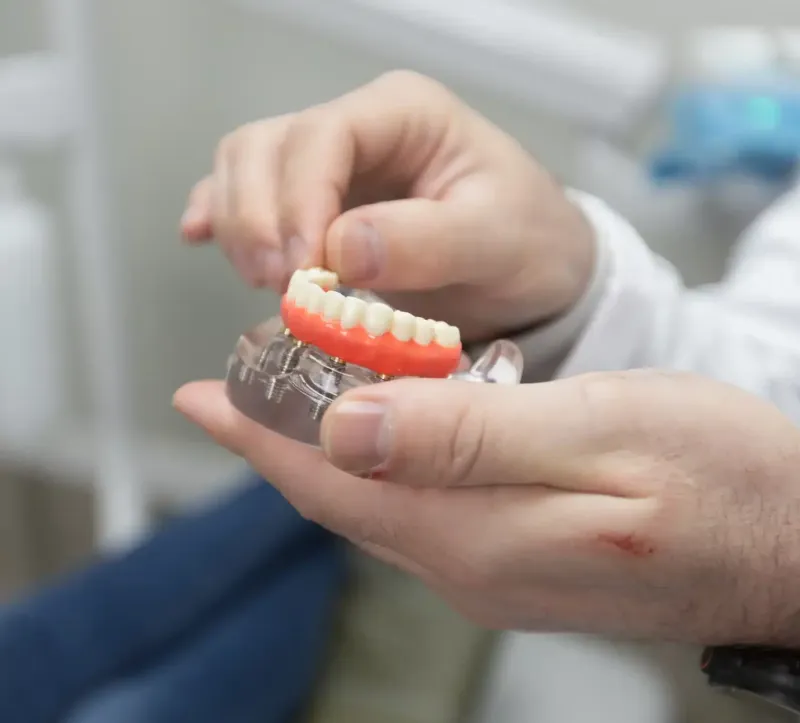
Why Dentures Wear Out
Most people assume dentures are replaced because the teeth break. In reality, the bigger issue is usually the mouth underneath. When natural teeth are lost, the jawbone that once held them gradually shrinks because it no longer gets the stimulation that tooth roots provide.
As the bone and gums change shape, a denture that once fit snugly starts to rock or slip. The acrylic base and the teeth themselves also wear down with daily chewing. Over time, worn teeth can reduce chewing efficiency and change the way your face looks at rest.
Full Dentures vs. Partial Dentures
Full dentures replace an entire arch and rest directly on the gums, so they are especially sensitive to bone changes. Partial dentures attach to remaining natural teeth with clasps or precision attachments. Their lifespan can depend on the health of those anchor teeth as much as on the denture itself.
Signs Your Dentures Need Attention
Your dentures may be telling you they need help long before they break. Pay attention to how they feel and function from week to week, and schedule a visit if you notice any of the following.
- The denture feels loose, slips when you talk, or needs more adhesive than it used to
- Sore spots, redness, or irritation on the gums that keep coming back
- Clicking sounds when you speak or chew
- Visible cracks, chips, or teeth that look flat and worn
- Persistent odor or staining that cleaning does not remove
- Changes in your bite, or jaw discomfort after meals
Reline, Rebase, or Replace?
Not every fit problem means you need a brand-new set. A reline adds new material to the tissue side of the denture so it matches the current shape of your gums. A rebase goes further and replaces the entire pink base while keeping the existing teeth.
Replacement makes more sense when the teeth are badly worn, the base is cracked or warped, or the fit has changed so much that adjustments no longer hold. Your dentist will weigh these options at your exam and explain which one fits your situation.
Habits That Help Dentures Last Longer
Good daily care protects both your dentures and your gums. Small habits add up, and they can delay the need for repairs.
Brush your dentures every day with a soft brush and a cleaner made for dentures, since regular toothpaste can scratch the surface. Handle them over a folded towel or a sink of water so they are less likely to break if dropped. Remove them at night so your gums can rest, and store them in water or a soaking solution so they do not dry out and change shape.
Avoid hot water, which can warp acrylic, and never try to adjust a denture yourself. Routine exams and cleanings are still important, because your dentist can check the fit, screen the soft tissues, and polish away buildup. The American Dental Association shares more denture care guidance for everyday use.
When an Implant-Supported Option Makes Sense
If you are on your second or third set of dentures and still struggle with slipping, it may be time to look at implant support. Implants act like artificial roots and give the jawbone some of the stimulation it lost, which may help slow shrinkage.
Implant dentures snap onto a few strategically placed implants for a more secure feel. For patients who want a fixed option that does not come out at night, full mouth implants may be worth discussing. A 3D scan helps determine whether you have enough bone or whether grafting would be needed first.
Paying for New Dentures or Repairs
We accept all PPO plans in network, along with HSA and FSA. Some plans include a benefit for relines or replacement after a set period, so it is worth checking your coverage. Financing through CareCredit, Alphaeon, and Happen Bank may also help spread the cost of a new set or an implant upgrade.
FAQs
How Often Should Dentures Be Checked?
Most people benefit from a fit check at their regular dental visits. Your dentist may suggest more frequent checks if you notice looseness or sore spots.
Can a Broken Denture Be Repaired?
Many cracks and chipped teeth can be repaired. If the base is badly damaged or the fit is poor, a new denture may be the better choice.
Is It Normal for Dentures to Feel Loose Over Time?
Yes. Gradual changes in the jawbone and gums are common, which is why relines are a normal part of denture care.
Should I Sleep With My Dentures In?
Most dentists recommend removing them at night to let your gums rest and to keep the denture clean.
Keep Your Smile Comfortable and Secure
Dentures work best when they are treated as a partnership between you and your dental team. Regular checks, good habits, and timely relines can keep you comfortable for longer, and a replacement or implant upgrade can restore a secure fit when the time comes. If your dentures are slipping or sore, contact Empower Dental Glendale to schedule an evaluation.