Gum disease often moves quietly. Gums that bleed when you floss, breath that stays stale, or teeth that feel a little looser than they used to can all point to bacteria living below the gumline, in pockets a toothbrush cannot reach. Laser periodontal therapy uses a focused dental laser to clear infected tissue from those pockets, often with less bleeding and an easier recovery than scalpel-based gum surgery.
At Empower Dental Group, Burbank – Coastland Dental, laser care is one part of our periodontal treatment in Burbank. Our dentists work as Super GPs, so the same team that measures your gums can also plan cleanings, restorations, or implants if you need them later. We serve patients in English, Spanish, Russian, Arabic, and Armenian.
Catching gum disease early may help you keep more of your natural teeth and avoid more involved treatment down the road.
Visit our office on South Lake Street in Burbank, CA. Call to schedule a gum evaluation or book online.
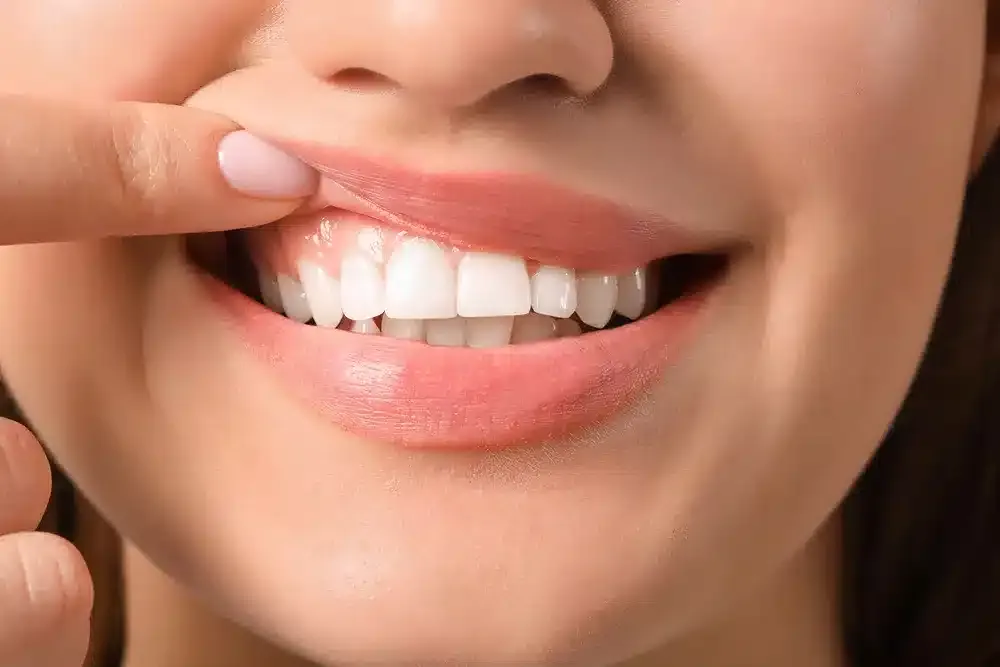
This treatment offers a minimally invasive way to treat periodontitis, the advanced stage of gum disease. A thin laser fiber is guided between the tooth and gum, where its light energy targets inflamed tissue and the bacteria feeding on it. Healthy gum tissue is largely left alone, and the laser helps seal small blood vessels as it works.
The laser is paired with careful root cleaning to remove hardened tartar, so the gum has a clean surface to heal against. The American Academy of Periodontology explains that untreated gum disease can damage the bone that holds teeth in place, which is why timely care matters.
Periodontal charting records the depth of every pocket so progress can be measured afterward.
Digital X-rays with AI-assisted radiograph analysis help show bone levels around each tooth.
3D digital scanning gives a detailed record of your gums and bite for future comparison.
* This calculator provides an illustrative estimate by dividing the treatment cost by the selected number of months. It excludes interest and fees and is not a financing offer. Actual monthly payments may be higher.
* Financing is offered through independent third-party lenders. Approval, rates, fees, terms, and available repayment periods are determined by the respective provider. Contact our office or review the provider’s application for current options.
Treatment may be completed in one visit or divided into two, depending on how many areas need care. Here is how a typical appointment unfolds.
We chart pocket depths, review your X-rays, and numb the treatment area. Nitrous oxide and other sedation options are available for anxious patients.
The laser fiber removes infected lining tissue and reduces bacteria inside each pocket while leaving healthy gum in place.
Ultrasonic and hand instruments clear tartar from the roots so the gum can reattach to a smooth, clean surface.
You go home with aftercare instructions, then return for follow-up charting and more frequent cleanings while the gums firm up.
A gum evaluation tells us whether laser care is a good fit. You may be a candidate if one of these sounds familiar.
Gums that bleed during brushing or look red and swollen often signal active infection below the gumline.
Pockets that remained deep after a standard deep cleaning may respond to targeted laser treatment.
Teeth that move as gum attachment weakens may firm up once inflammation is brought under control.
Patients who want a less invasive option than traditional flap surgery often ask about laser care first.
Conventional periodontal surgery folds back a section of gum to reach the roots, then closes it with stitches. It remains a sound option, and when bone loss is severe it may still be the better choice, sometimes combined with soft tissue grafting. Laser therapy reaches the same pockets through the natural space between tooth and gum, so stitches are usually not needed. We explain which approach suits your case once your pockets have been measured.
Expect some tenderness for a few days. Soft foods, gentle brushing near the treated area, and avoiding tobacco all support healing. Mild sensitivity to cold may linger for a short time as the gums tighten. Keeping your periodontal maintenance visits is one of the most important steps, because gum disease can return if bacteria build up again.
The cost of laser periodontal therapy depends on how many teeth are involved, how deep the pockets are, and whether additional procedures are needed. Many dental plans include benefits for periodontal treatment. We accept all PPO plans in network, along with HSA and FSA. For any remaining balance, financing is available through CareCredit, Affirm, HFD, Alphaeon, and Happen Bank. Visit our financing and insurance page to compare options.
If you have not had a checkup in a while, a dental exam and cleaning is a good first step, and we can chart your gums at the same visit. Patients who feel uneasy about treatment can also ask about sedation dentistry.
Ready to address bleeding or receding gums? Contact Empower Dental Group, Burbank – Coastland Dental to schedule your laser periodontal therapy consultation.
Flexible Payment Options
Contact our Burbank office to discuss available payment options. Use the links below to review each provider’s current application terms.




Let’s bring out the best in your smile—with the technology, experience, and care you deserve.
At Coastland Dental in Burbank, CA, advanced tools mean better care. By investing in the latest dental technology, we diagnose with greater accuracy, treat with more precision, and help you achieve a healthier, more beautiful smile—often with less discomfort along the way.
The area is numbed before the laser is used, so most patients feel pressure rather than pain. Afterward, tenderness is usually mild and can often be managed with the over-the-counter pain relief your dentist recommends.
Many patients complete treatment in one or two visits, followed by a check-in to re-measure the pockets. Your plan depends on how many areas are affected.
In many cases, yes. Most people return to normal routines the following day, though we suggest taking it easy and choosing soft foods while the gums settle.
Laser care can stop active infection and help gum tissue reattach to clean roots. Gum and bone that have already been lost generally do not return on their own, which is why early treatment matters.
It can help many moderate to advanced cases. When bone loss is severe, traditional surgery or grafting may be recommended, sometimes alongside laser care.
A deep cleaning removes tartar from the root surfaces. Laser therapy adds a step that clears infected tissue from the pocket lining, which can help when pockets stay deep after cleaning alone.
Soft, lukewarm foods like yogurt, eggs, and soups are good choices for the first several days. Avoid crunchy, spicy, or very hot foods near the treated area.
Coverage depends on your plan and diagnosis. We accept all PPO plans in network, along with HSA and FSA. Our team can review your benefits before treatment.
Brush twice a day, clean between your teeth daily, avoid tobacco, and keep your periodontal maintenance visits, which are often scheduled more often than routine cleanings.
At Coastland Dental, we believe high-quality care should be accessible to every patient. To make treatment more affordable, we partner with trusted financing providers. Available plans, interest rates, and repayment terms vary by provider and are subject to approval. Contact our office or review the provider’s application for current options.
From implants and crowns to cosmetic treatments and smile makeovers, our financing options are designed to help you move forward with your care—without delay.
No Impact to Credit
Make your first appointment stress-free

At Coastland Dental, we stand behind the quality of our work with warranties tailored to your specific treatment. Our fixed hybrid prosthetics include a Lifetime Warranty, provided you maintain your recommended hygiene visits and ongoing care. For crowns and other fixed restorations, we offer a 5-year warranty as long as you keep up with regular exams, cleanings, and any dentist-recommended maintenance.
To stay eligible for warranty protection, you’ll need to complete all suggested maintenance at the intervals outlined by the provider or manufacturer. Failure to follow and document routine care could lead to reduced or voided coverage. Proof of service may be required if a claim is submitted.